Hohenschönhausen – The Secret Prison of the Stasi
No street name on GDR maps, 11,000 political prisoners, survivor guides: the Stasi remand prison Hohenschönhausen – Germany's most closely guarded secret, today one of Europe's most affecting memorial sites.
Plan Your Private TourDuration
1 day
Region
Berlin-Hohenschönhausen
Format
Private Chauffeur Tour
Highlights
- Soviet "U-boats" – windowless basement cells from the 1945–46 occupation period
- Stasi interrogation rooms – preserved as they were, methods of psychological attrition
- Tours guided by former prisoners – survivors who sat in these very cells
- Soviet Special Camp No. 3: 3,000 deaths, 1945–1946
- Not on any GDR map: the history of the invisible place
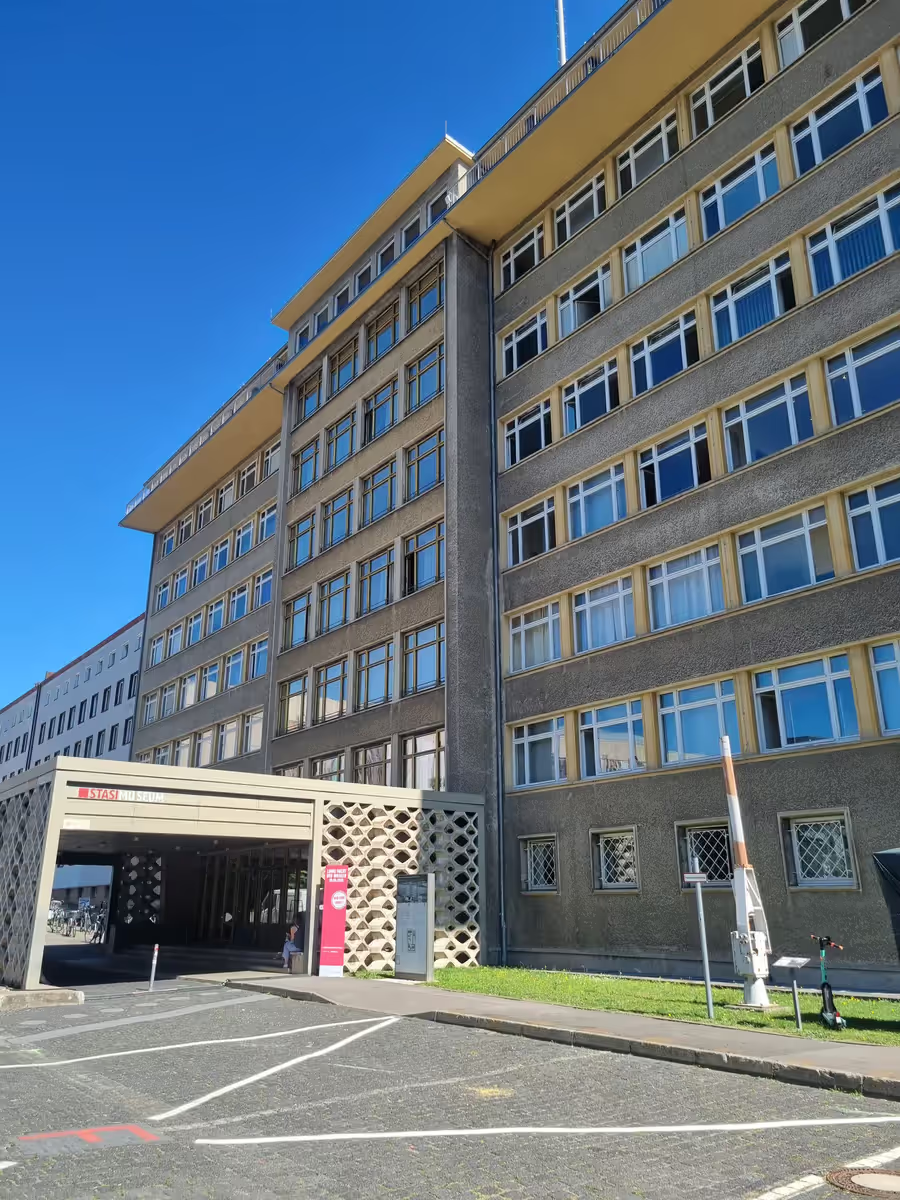
- Optional combination with the Stasi headquarters in Lichtenberg as a full-day GDR tour
Enquire – no commitment, no form.
Enquire →Experience
Location: The Invisible Place
The Berlin-Hohenschönhausen Memorial is located in the district of the same name, northeast of the city centre, approximately 8 kilometres from Alexanderplatz. Until 1990 this site appeared on no official map – the streets leading to the prison simply did not exist on GDR street plans. Taxi drivers who accidentally wandered nearby were turned away by armed guards.
From Soviet Special Camp to Stasi Prison
The site has a dual history that begins in 1945: immediately after the war, Soviet troops established "Special Camp No. 3" on the grounds of a former Nazi communal canteen – one of several Soviet internment camps on German soil. Between 1945 and 1946, up to 4,000 people were held here in inhumane conditions, including actual Nazi perpetrators but also arbitrarily arrested Germans with no culpability whatsoever. An estimated 3,000 of them died of hunger, cold and disease.
In 1951 the Ministry for State Security took over the site and converted it into its central remand prison. The notorious "U-boats" – damp, windowless basement cells from the Soviet era – were initially kept in use before new prison buildings were erected. Until 1989, an estimated 11,000 people passed through Hohenschönhausen as political prisoners.
Methods of Interrogation: From Violence to Psychological Destruction
Over the decades, the Stasi developed an increasingly refined psychology of attrition at Hohenschönhausen. Physical torture – still practised in the early 1950s – was replaced by systematic psychological destruction: sleep deprivation through hourly cell checks, disorientation through falsified time information, total isolation without any external communication, months-long interrogations without formal charges.
The so-called "rubber cell" – a fully padded room that eliminated all self-perception – was one instrument of this later phase. Prisoners often had no idea where they were for weeks at a time. Mail was not forwarded; family members were told only that the arrested person was "in pre-trial detention."
Survivors as Guides
What sets Hohenschönhausen apart from other memorial sites is this: a large proportion of tours are conducted by former prisoners who themselves sat in these cells. These encounters – a person telling you about their own arrest, their first interrogation, their eventual release, while standing before the very cell they occupied – carry an immediacy that no exhibition text can replicate.
The memorial was opened in 1994 and today receives around 100,000 visitors annually. Its first director, Hubertus Knabe, who had himself been surveilled for years by the Stasi, made Hohenschönhausen the most important site of memory for the SED dictatorship in Germany.
Related Tours
Frequently Asked Questions
Can the Hohenschönhausen Stasi prison be visited only on a guided tour?
How long does the visit take?
Do I need to arrange my own transport?
Can the visit be combined with other GDR sites?
Your Experience
- Private transfer in a luxury vehicle
- Personal driver & travel companion
- Handpicked luxury hotels
- Flexible itinerary adjustments
Why this tour?
Hohenschönhausen is not an abstract exhibition hall – it is a place where history is physically palpable. Walking through a former prisoner's own cell alongside them is an experience of history that cannot be forgotten.
Your Individual Private Tour
Every trip is planned for you
Route, duration, hotels and itinerary – tailored to your wishes. Price on request.
Enquire Now