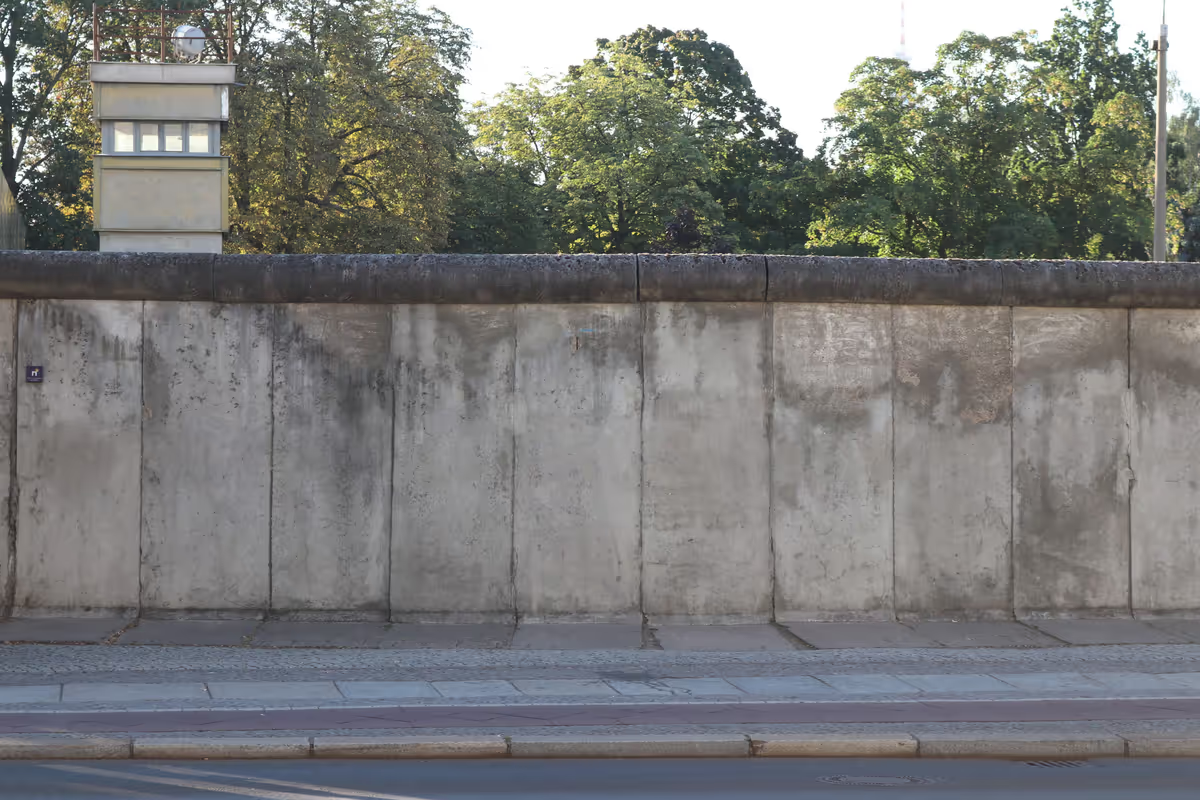
GDR History Tour – 40 Years of Dictatorship on German Soil
16 million people, 40 years of SED rule, a Wall that fell at 6:57 pm: the GDR as a private journey – from the Berlin Wall to the Thuringian border fortifications, historically grounded and individually shaped.
Plan Your Private TourDuration
2–5 days
Region
Berlin / Thuringia / Brandenburg
Format
Private Chauffeur Tour
Highlights
- Berlin Wall – Bernauer Strasse Memorial with original death strip
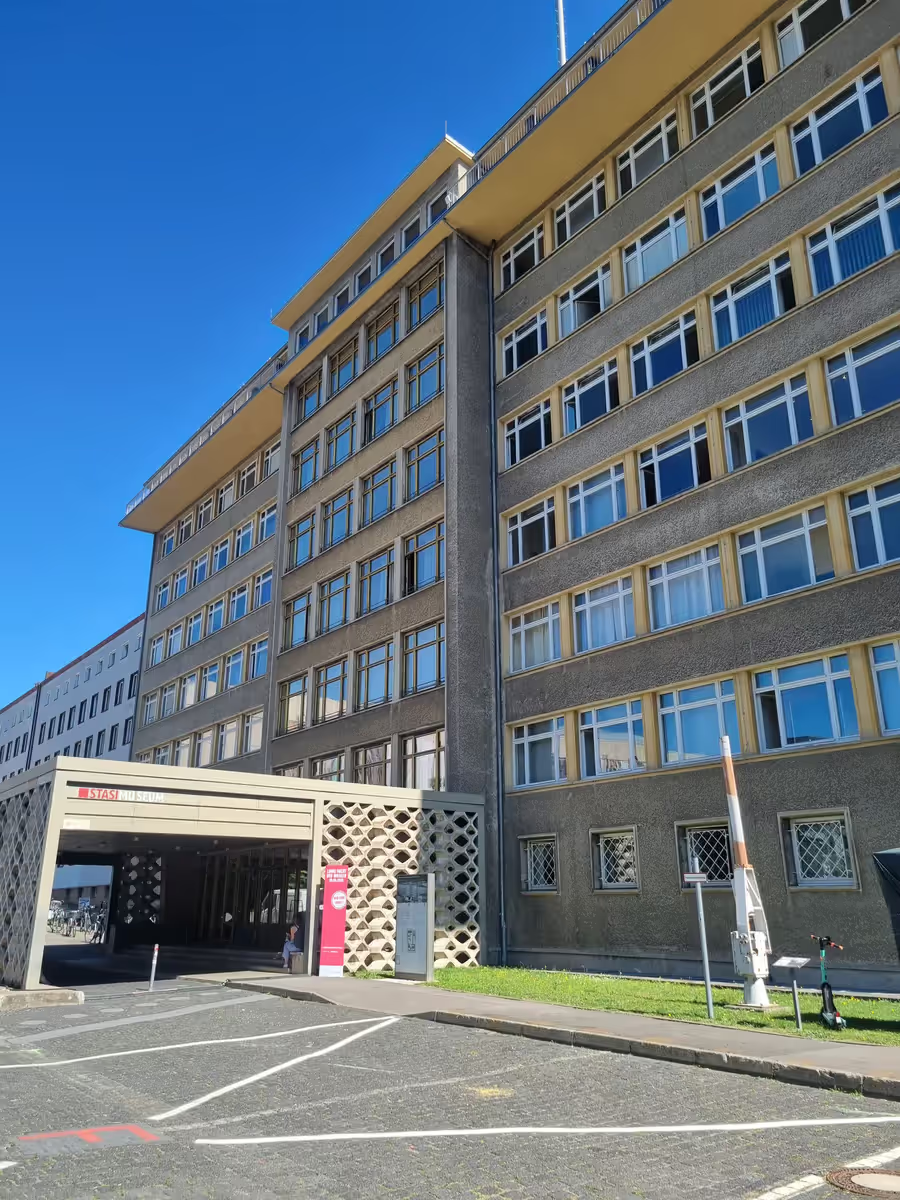
- Stasi Headquarters Berlin – Erich Mielke's office and 111 km of files
- Hohenschönhausen – the Stasi's secret remand prison
- Waldsiedlung Wandlitz – the villas of the SED leadership behind the Wall
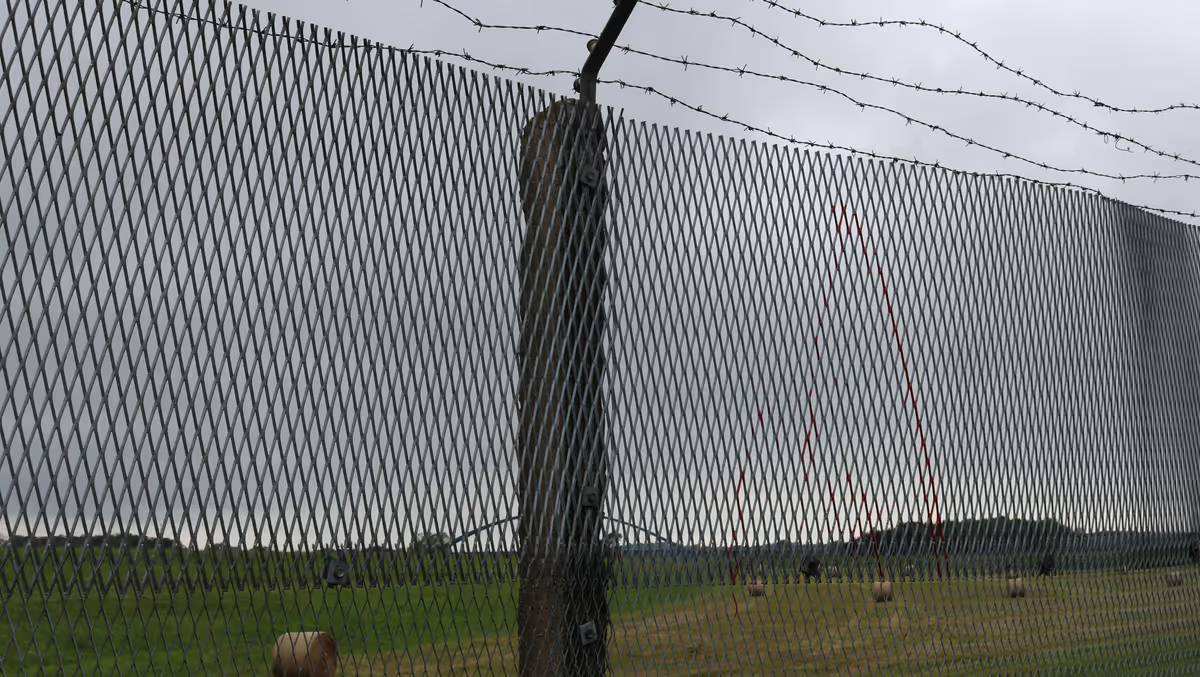
- Border Museum Schifflersgrund – fully preserved border fortifications in Thuringia
- Individually combinable according to your interests and available time
Enquire – no commitment, no form.
Enquire →Experience
Germany's Division Through Western Eyes
For visitors from Britain and the United States, Germany's Cold War division is not simply a foreign history. It was the defining theatre of a conflict that shaped the postwar world – and the backdrop to several of its most consequential moments.
In March 1946, Winston Churchill stood in Fulton, Missouri and named what was already happening: "From Stettin in the Baltic to Trieste in the Adriatic, an iron curtain has descended across the Continent." Churchill held no official position at the time – he had lost the 1945 election. But his speech gave a metaphor to a physical reality that millions of Germans were already living. Three years later, the GDR was founded on the eastern side of that curtain.
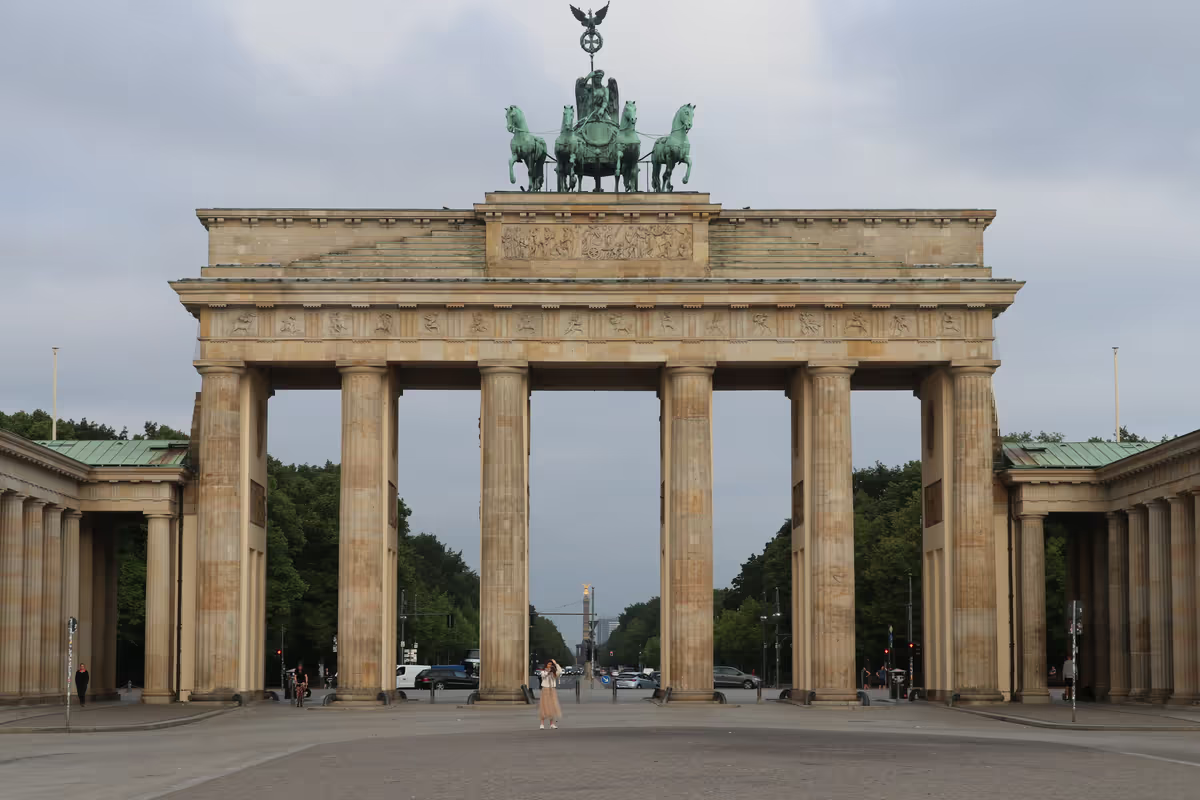
In June 1963, John F. Kennedy stood at the Wall and declared to hundreds of thousands in West Berlin: "Ich bin ein Berliner." The speech was heard as solidarity; behind it was the strategic reality that Berlin had become the test case for the Western alliance – a city under siege, 110 miles inside Soviet-controlled territory. Kennedy had already navigated the Berlin Crisis of 1961, when the Wall went up. In June 1987, Ronald Reagan stood at the Brandenburg Gate and challenged Gorbachev directly: "Tear down this wall." Less than two and a half years later, it fell – not on command, but because a bureaucrat misread a press release at a televised press conference.
John le Carré set his Cold War novels in the world of Berlin's divided intelligence services. His Berlin – grey, morally compromised, operating under rules that served neither side well – was not a novelist's invention. It was a precise observation. A visit to the sites we cover on this tour makes le Carré read differently. The fiction turns out to have been reportage.
The GDR: 40 Years of Germany in Experiment
The German Democratic Republic (GDR) existed from 1949 to 1990 – 40 years of a dictatorship on German soil, in which over 16 million people lived. The SED regime (Socialist Unity Party of Germany) rested on a comprehensive surveillance apparatus (the Stasi), a state-controlled economy and propaganda that permeated every area of life. And yet: there were East German citizens who found community, meaning and a sense of home in this society – an ambivalence that any honest engagement with this history must acknowledge.
The Sites of GDR History
Our multi-day GDR tour connects the most significant memorial sites into a coherent overall picture. Berlin is the centrepiece: the Berlin Wall Memorial on Bernauer Strasse – with the best-preserved stretch of the border strip – shows what the Wall really was: not a symbol, but a killing machine. The Stasi Museum on Ruschestrasse (the former headquarters) and the Hohenschönhausen Memorial (the secret remand prison) reveal the surveillance apparatus in its concrete, institutional form.
The Thuringian Border Landscape: Germany's Inner Border
To truly understand the GDR, you need to have seen the inner German border. The Border Museum Schifflersgrund in Thuringia, located directly on the former border line, preserves the most complete surviving section of the fortification system: rear wall, patrol road, control strip, vehicle trenches, automatic shooting devices (SM-70). Schifflersgrund is not a large institution – which is precisely why it has an impact that larger institutions lack: you are standing at the border itself.
Border Crossings and Freedom of Movement
For GDR citizens, freedom of movement was the most precious right denied to them by the state. Only a few were permitted to travel west – retirees, because their return was considered economically guaranteed, and privileged party functionaries. Thousands tried to escape nonetheless: across the Baltic Sea, through tunnels, in car boots, by balloon. At least 140 people died in the attempt; the true figure is probably higher.
The Schabowski Paper and the Fall of the Wall
On 9 November 1989, at 6:57 pm, Günter Schabowski read from a paper at a press conference that he had not fully read beforehand: the new regulation for travel applications would, as the document stated, take effect "immediately, without delay." Asked by a journalist when exactly, Schabowski replied: "Immediately, without delay." A few hours later the border crossings opened – not on command, but because the border guards were overwhelmed and the crowds could not be stopped. This multi-day GDR tour places every site in this broader context.
Gallery
Related Tours
Frequently Asked Questions
Which regions does the GDR History Tour cover?
How many days should I plan?
Which sites are included?
How does the private tour differ from a group tour?
Your Experience
- Private transfer in a luxury vehicle
- Personal driver & travel companion
- Handpicked luxury hotels
- Flexible itinerary adjustments
Why this tour?
The GDR is not a closed chapter – it is still part of Germany's present: in the biographies of survivors, in debates about accountability and memory, in the structural differences between East and West. A private tour through the most important sites of this history is the most direct path to understanding.
Your Individual Private Tour
Every trip is planned for you
Route, duration, hotels and itinerary – tailored to your wishes. Price on request.
Enquire Now