Private Tours · Cold War & GDR
Private Cold War Tours – Behind the Iron Curtain in East Germany
The Stasi headquarters, Hohenschönhausen prison, the Berlin Wall and the inner German border: the GDR as it actually was, not as Cold War mythology described it. Privately guided, historically grounded.
Request Private TourThe Other Side of the Iron Curtain
In 1946, Winston Churchill stood in Fulton, Missouri and named what had already begun: "From Stettin in the Baltic to Trieste in the Adriatic, an iron curtain has descended across the Continent." The speech gave a metaphor to a physical reality that millions of Germans were already living. The Iron Curtain was not a political abstraction. In Germany, it was a border of concrete, wire, watchtowers, and automatic shooting devices that ran through the middle of a continent – and through the middle of families, cities and lives.
For those who grew up in Britain or North America during the Cold War, Germany was the front line. In 1963, Kennedy stood at the Wall and said "Ich bin ein Berliner." In 1987, Reagan stood at the Brandenburg Gate and demanded that Gorbachev tear it down. Both speeches are still quoted. Neither man could have known that the Wall would fall – spontaneously, chaotically, because a bureaucrat read a press release incorrectly – less than three years after Reagan's speech.
George Orwell published Nineteen Eighty-Four in 1949, the same year the GDR was founded. At the time, reviewers called it speculative fiction. When the Stasi archives opened in 1990, historians found that Orwell had, in several respects, underestimated what a surveillance state could actually achieve. The Ministry for State Security employed one officer for every 63 East German citizens – a ratio unmatched by any intelligence apparatus in history, before or since.
John le Carré set his Cold War novels in the world of Berlin's divided intelligence services. His Berlin – grey, suspicious, morally compromised – was not a novelist's invention. It was a precise observation. A visit to the sites we cover makes his fiction read like reportage.
Our Cold War & GDR Tours
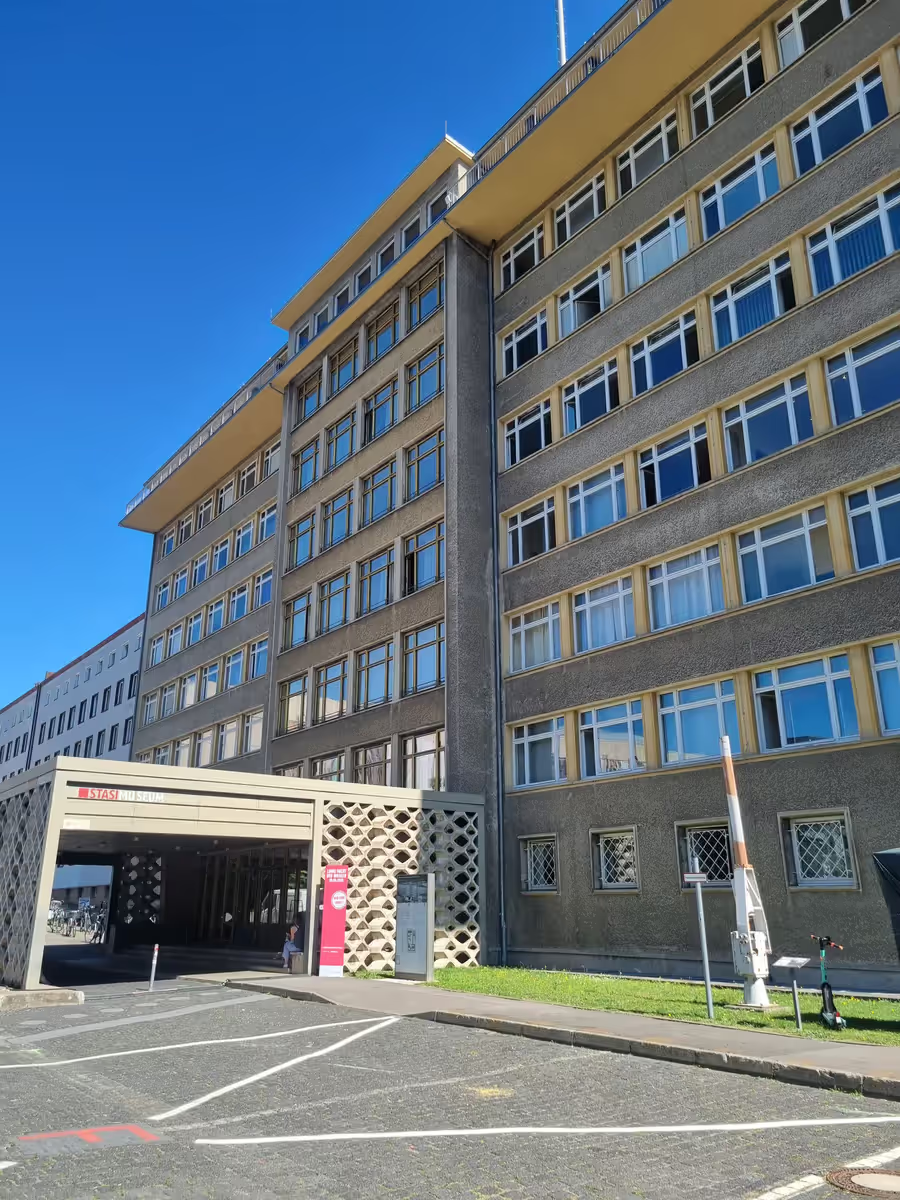
Stasi Headquarters Berlin
91,000 employees, 111 km of files, Mielke's office exactly as he left it: the nerve centre of the GDR surveillance state.
Hohenschönhausen Stasi Prison
The Stasi's secret remand prison: isolation cells, interrogation methods, and survivor-led tours.
Wandlitz Elite Settlement
The SED leadership's villa compound behind their own Wall: the privileged lives of East Germany's ruling class.
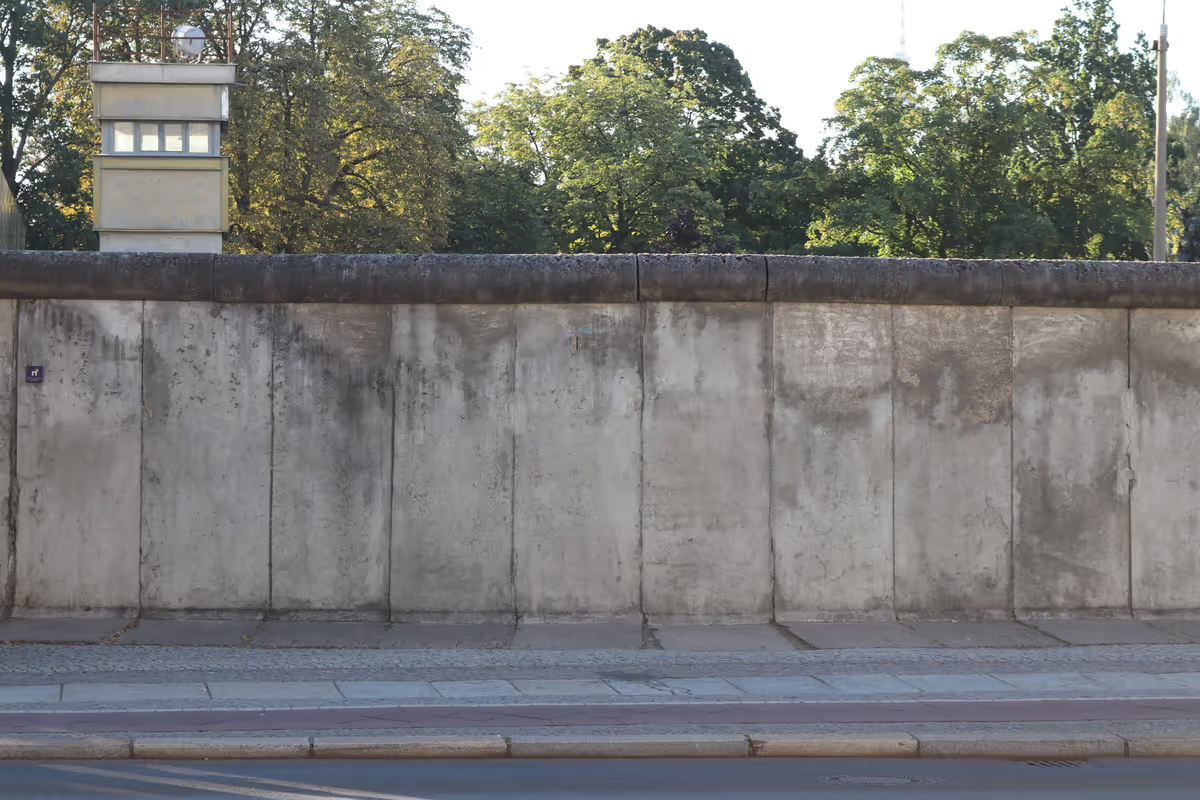
GDR History Tour
The comprehensive GDR journey: Berlin Wall, Stasi, Hohenschönhausen and the inner German border fortifications in Thuringia.
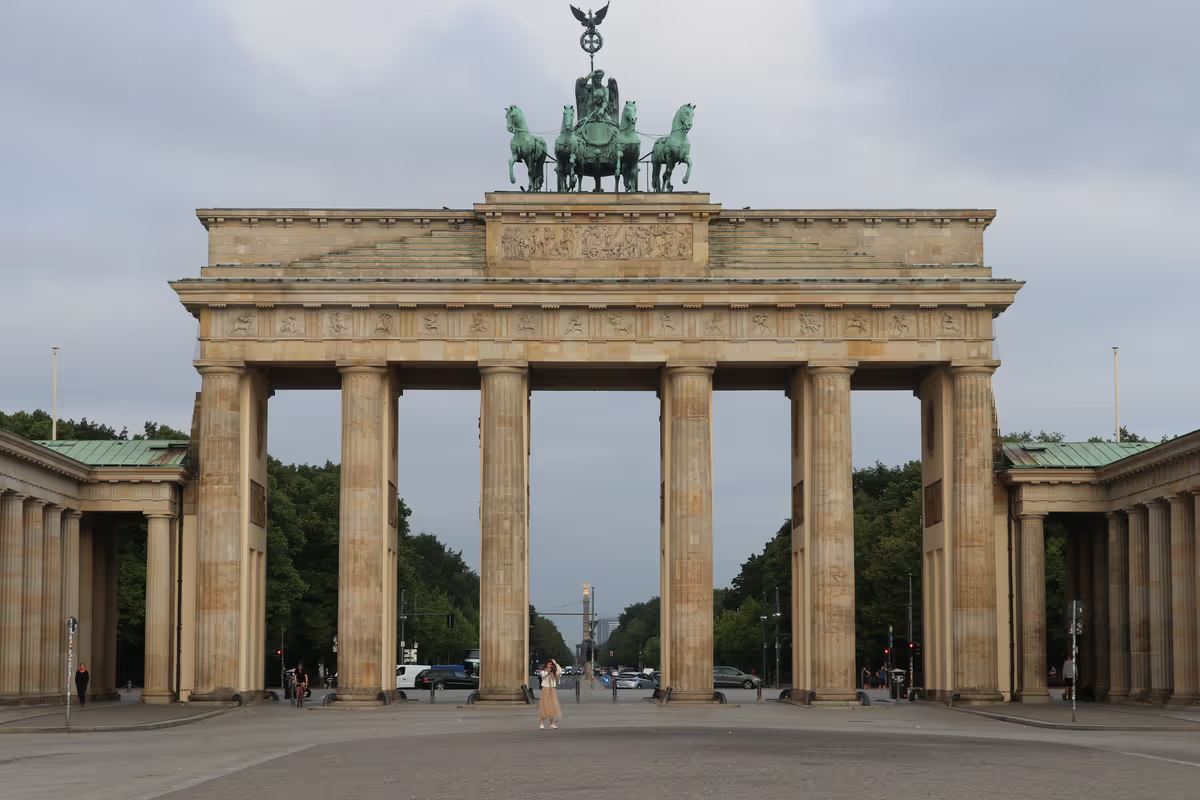
Berlin Highlights
Berlin as a historical panorama: Brandenburg Gate, Checkpoint Charlie, the Reichstag and the landscape of a divided city.
What You Will Actually See
These are not museum re-enactments. The Stasi headquarters in Berlin-Lichtenberg is the actual building where Erich Mielke ran the surveillance apparatus from 1957 to 1989. His desk is still there. His direct telephone line to Moscow is still there. The eavesdropping installation that recorded his own ministers' calls is still there. Hohenschönhausen is the actual prison where political detainees were held in isolation, interrogated using techniques designed to break without leaving visible marks, and then either tried or released – depending on what the Stasi needed at the time. Wandlitz is the actual compound where the SED leadership lived behind a wall they had built to keep their own population in.
The inner German border at Schifflersgrund in Thuringia is the most completely preserved section of the fortification system: the rear wall, the patrol road, the control strip, the vehicle trenches, and the positions for the SM-70 automatic firing devices. Standing there, with fields on both sides and the silence of a Thuringian afternoon, makes the Cold War concrete in a way that no documentary can.
We guide you through these sites with the historical context that turns a building into evidence. We answer questions honestly. And we move at your pace.
Individual Private Tour
Every Itinerary Is Built for You
Berlin, Thuringia, Brandenburg: GDR history can be explored in a day or over five – according to your interests and available time.
Request Your Tour